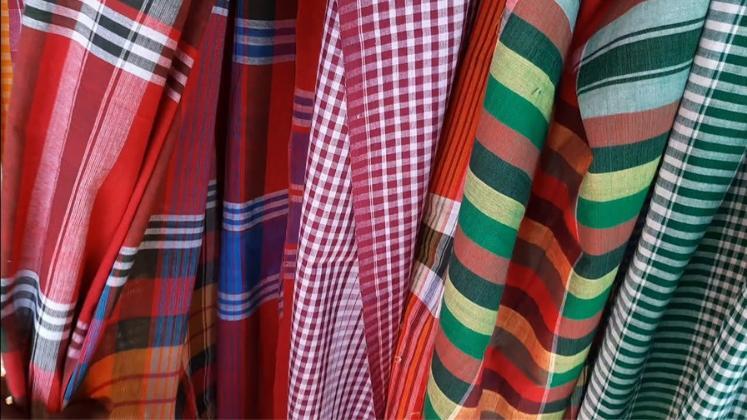
According to industry insiders, exports of locally made lungis, a popular everyday outfit for men in Southeast Asia, have been developing quickly due to the growing Bangladeshi diaspora globally and Bangladesh’s expanding population.
The value of the home lungi market is close to Taka 15,000 crore annually, while local producers export lungis valued at over US $ 1 million annually.
But even five years ago, the domestic market for lungis was worth Taka 10,000 crore a year while exports only amounted to a few lakh US dollars, they added.
The commonality of wearing lungis and the increased demand for cotton yarn lungis have made India an important export market for Bangladeshi lungis in recent years.
Furthermore, according to exporters, lungis valued at over Taka 1,200 crore are shipped informally, mainly to Malaysia and Indonesia.
The domestic lungi market is rising at a rate of more than 10 per cent annually, despite the adverse impacts of rapid urbanisation on culture and favoured clothing styles.
The fact that most city people would rather wear trousers than lungis, along with the fact that trousers are more durable than lungis, serves as an example of how urbanisation has affected the lungi market.
Consequently, compared to rural areas, there is less of a demand for lungis in urban settings. However, this can also be explained by the fact that people in rural areas still mostly wear lungis.
Lungis are exported to a minimum of 25 countries worldwide, with a significant portion of their market consisting of Bangladeshi expatriates residing in places like Saudi Arabia, Qatar, Oman, Singapore, Dubai, Malaysia, Bahrain, England, Germany, the US, India, Myanmar, and Indonesia.