 Earlier, only luxury goods makers used to personalize products based on consumers’ needs and budget, but now with even ‘common people’ striving to be individual and stand-out, brands have slowly started to offer what has popularly come to be known as mass customization that promises to give individuality to the product design process. As a result, a trend which was traditionally restricted only for high-end luxury brands such as Burberry, is now being seen and embraced by mass brands such as Nike, Converse, etc. and also trickling to prêt collections.
Setting off the mass customization trend in sportswear, Nike launched its highly successful platform NIKEiD, allowing its consumers to add personalized look and feel to its products. ‘Ultra-Cool. Made for You’ – the slogan at Nike.com for NIKEiD, an online service that allows customers to create their own clothing by customizing the colour, design, and even some of the performance features to get their gear exactly how they want it. This service is helping Nike take advantage of direct-to-consumer sales and earn more profits. The Nike Management claims that NIKEiD was one of the company’s points of focus in reaching its goal of US $ 5 billion in online sales by the end of the FY 2015. ‘Converse’, yet another sportswear brand which is owned by Nike, debuted its own mass customization platform in 2005 and today, about 10 to 12 per cent of its total business at the New York store goes through customization. Because of the huge popularity of their products, their website now offers customizable sneakers, available in several popular selections like the classic All-Star pairs to the slightly more chic Jack Purcell leather editions.
Get Access to more Market Analysis articles from
APPARELRESOURCES.COM. SUBSCRIBE TODAY

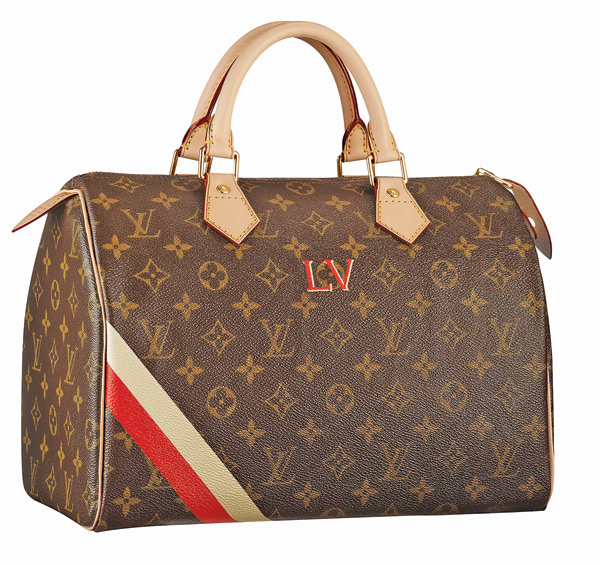
Many luxury fashion brands have launched customization platforms like Louis Vuitton’s Mon Monogram, which lets consumers add personal initials and colours to the brand’s bags, and Prada Customize, which besides letting people add personal lettering to bags, also allows them to configure their own shoes and sunglasses. The personalized monogram service Mon Monogram also allows customers to choose from the Speedy and Neverfull handbags and the Keepall and Pégase travel bags, in all sizes, and add their own colourful stripes and initials. Customers can also play around with options such as trying different bags, different sizes, moving the stripe from side to middle, choosing from 17 colours, adding a full-stop between the letters, resulting in more than 200 million possible combinations per bag.
According to Forrester Research’s report titled ‘Mass customization is (finally) the future of products’ describes it in two stages – first, the customer participates in design by making choices around particular features; and second, the manufacturer produces a unique built-to-order product for delivery to the customer.
Not far behind, British luxury brand Burberry launched the Burberry Scarf Bar, a simpler service that lets customers monogram their initials on scarves (priced between US $ 475 and US $ 995), ponchos and perfumes made from colours, fabric weights and patterns of their choosing, reflect a recalibration of the company’s approach to customisation. Launched online and in stores, the ‘Scarf Bar’ allows shoppers to design a classic cashmere scarf, completely personalized to their own specifications. With more than 30 colourways available as well as 30 shades of thread for embroidering initials, it’s the first time the company has offered this large, customizable offering for accessories.
According to Elizabeth Spaulding, Head of Bain & Company’s Digital Transformation Group, optimum lead times vary by product: “Footwear customers are willing to wait three to four weeks for a product to be delivered, but interest in customised men’s shirts declined after a two-week wait time.”
Bespoke tailoring from high-end Savile Row to mass market Indochino, an e-commerce start-up that lets you buy a made-to-measure suit without leaving the couch, have become eternal success stories. Bow & Drape is another such brand which has its strong foothold in clothing for the millennial generation, offering trend-driven clothing and accessories with tonnes of options to personalize. For example, a pair of US $ 135 tailored shorts is available in two colours and two lengths, with 71 appliqué options, 24 embroideries and 10 fonts for monogramming. While some pieces take under two weeks to produce, others take up to four, and where everything is cut-and-sewn or at least finished at factories in New York and on the West Coast. Piol, another New York-based start-up, offers bespoke made in New York dresses in five styles and over 56,000 combinations. (A cotton shift dress is priced at US $ 545.)
Clearly, the opportunities for mass customization are wide, and of late a slew of start-ups are also putting the customers in the designer’s seats as a sense of control is appealing to many finicky shoppers. However, the concept is not a cakewalk and can be hard to operationalize due to timely production being a major challenge. One example of a failed venture in mass customization is Tinker Tailor, a mass customization platform for designer fashion that let customers tweak runway pieces by designers like Marchesa and Giambattista Valli, that closed shop last year. Though the orders were placed right after the shows ended, it took the garments three to four months to reach consumers, which actually defeated the purpose. The company also did offer own-label garments that could be custom-built from scratch, which took four to six weeks to deliver though the company aimed to reduce it to three days. This lag in delay was one of the many reasons for Tinker Tailor to close shop.
Not just restricted to mass fashion or luxury, customization is now sweeping through the whole of retail, with many new start-ups focusing on meeting the customer’s needs before making them brand loyalist. When industry experts say “It’s a big open space right now,” this holds especially true for customized fashion, which is on the verge of breaking through!





 Bharat Tex Special Report 2026