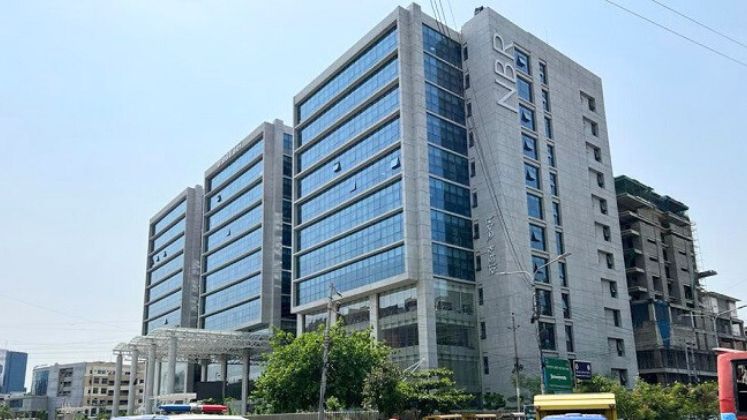
In a significant overhaul of the country’s revenue administration, the Government has officially abolished the National Board of Revenue (NBR) and established two new departments to streamline tax policy and collection activities. The move was formalized through the issuance of the Revenue Policy and Revenue Management Ordinance, 2025, following approval from President Md. Shahabuddin.
The ordinance marks the end of the NBR, aiming to separate policy formulation from revenue collection and enforcement. The newly formed structure divides the revenue sector into the ‘Revenue Policy Department’ and the ‘Revenue Management Department.’
The Revenue Policy Department will focus on developing tax policies, conducting research, and advising the Government, with an advisory committee comprising economists, tax experts, business representatives, and Government officials supporting its work. Meanwhile, the Revenue Management Department will handle revenue collection, administration, law enforcement, and human resource management at the field level, employing officers from the Civil Service’s Tax, Customs, and Administration cadres.
This restructuring addresses longstanding issues within the NBR, where policy formulation and implementation had often been conducted within the same framework. Such overlap had led to conflicts of interest, lobbying opportunities, and inefficient processes, hindering the achievement of revenue targets. Experts noted that the blending of policy thinking with field-level realities contributed to these challenges.
International organisations like the World Bank and the IMF have long advocated for reforms in Bangladesh’s revenue administration, emphasizing that separating policymaking from implementation can enhance efficiency. The Government’s decision is seen as a response to both external pressures and internal shortcomings.
While analysts believe that this reform will enhance transparency, accountability, and dynamism in revenue collection, they also warn of potential challenges during implementation. Think tanks such as TIB, CPD, and PRE have expressed optimism that, if the new departments function effectively, particularly in research-based policy development and efficient enforcement, the country could increase its revenue-to-GDP ratio from the current 10 per cent to 15 per cent in the coming years.





 Bharat Tex Special Report 2026