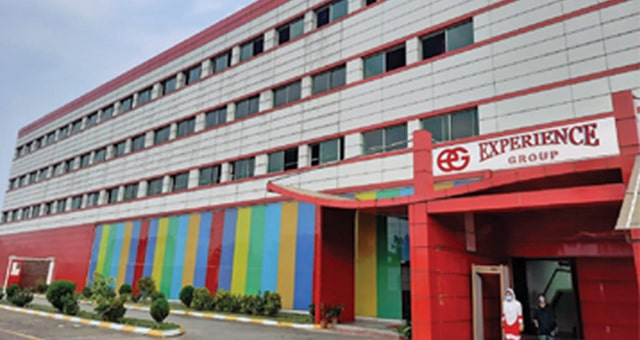
It won’t be an exaggeration to maintain there aren’t many of the likes of Experience Group in Bangladesh!
Boasting century-old existence, the company today has fully-compliant production units across geographical locations (Bangladesh and Ethiopia), supported aptly by the design facility in United Kingdom, to cater to European and US markets predominantly even as it made a breakthrough to bag new clients in India and Russia as well as to cater to a range of ladies, children and men’s clothing.
Apparel Resources (AR) caught up with the Director of Experience Group, Usama Maqsood, for a freewheeling conversation, touching upon wide-ranging topics from the origin and genesis of the group to its product offerings, market diversification endeavours, impact of COVID-19 and how it managed to come out of the same scathe-free to maintain the growth momentum going, market dynamics and many more.
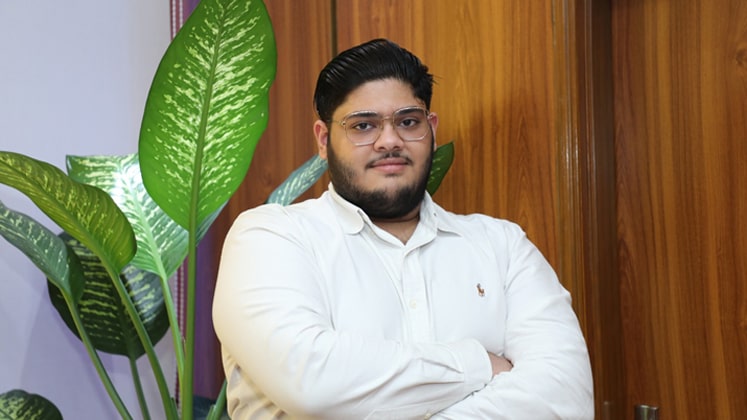
Here are some excerpts from the same…
AR: Experience Group is a great company with great tradition… Share some defining moments of your long and illustrious journey.
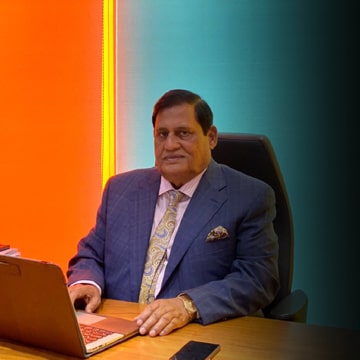
Usama Maqsood: Ours is a family-owned business, which traces its origin to the 1920s in the United Kingdom. The current Experience Group dates back to 1960 when Maqsood Ahmad, the current Chairman of the group, started off by trading in rags with Marks and Spencer through his uncle, who was a supply partner then of the today’s iconic British brand.
Over time, four manufacturing plants were opened in the UK in the 1970s under the name FAZIL & COMPANY LTD. Alongside manufacturing, the Group also started a few retail stores (clothing) under its umbrella.
By 1980s, increase in manufacturing cost across Europe rendered it unfeasible to operate in UK, when Maqsood had to scout for other cost-effective destinations and eventually set up two manufacturing units in Karachi, Pakistan along with his younger brother. However, the apparel manufacturing business in Pakistan that time was not very viable even if the country’s instability once again led him to look for other options.
In this quest, he travelled to Sri Lanka in 1995; however, after a bomb explosion at his hotel in Colombo, he came over to Bangladesh and, in the very same year, rented a very small manufacturing unit to run five lines, employing around 250 people initially.
Later in 1997, the construction of the first factory owned by Experience Group commenced and thus came into being Experience Clothing Company Ltd., the woven unit, which started production in 1998.
Fast forward to 2022, Experience Group today is a leading name in design and manufacturing of apparels, boasting of six manufacturing units under the umbrella of Experience Group of Industries, employing over 10,000 plus workers and catering to a wide range of clientele (Tommy Hilfiger, s.Oliver, Lidl, Costco, Tokyo Talkies, NKD and many more) across Asia, Europe and USA in product categories ranging from woven bottoms to workwear to lingerie and outerwear.
AR: How is Experience Group different from others, in terms of organisational structure and operations?
Usama Maqsood: To start with, we are not into manufacturing alone; apart from apparels, our other business verticals include retail, cosmetics, logistics and real estate.
Even though we don’t have manufacturing units in UK any more, one of our head offices is near the Liverpool Street, in the heart of London, and consists of a design studio and showroom.
As they say London is the city where designers are born (renowned names like Stella McCartney, Alexander McQueen and Lulu Guinness are all from London) and, long before the London Fashion Week came into being, the city was an iconic fashion destination and a leader in the style stakes. It’s not just the high-fashion players that London has shaped, the UK capital also plays host to some of the most exciting names in British fashion. Thus having a design studio in London helps us to pick up the right influences and inspirations at the right time and come up with our own innovations, which gives us an edge over others.
In terms of manufacturing, most of our units (Experience Clothing Company Ltd., Harry Fashion Ltd, Experience Textile Ltd, Experience Accessories Company Ltd. and Experience Design Ltd., even if two more units are in the pipeline, namely Experience Weaving & Knit Ltd., and Experience Accessories Company Unit 2 Ltd.) are in Bangladesh, and we have our other head office in capital city Dhaka.
Overseas, Experience Group has a large project in Addis Ababa, registered as Experience Clothing Ethiopia PLC, where we plan to produce underwear/lingerie. We will start with 30 lines initially sometimes this year and eventually make it a 500-plus lines facility, employing over 5,000 people.
We invested in Ethiopia way back in 2014 as it was considered the next strongly emerging apparel sourcing destination with a strong labour force. Besides, being a developing country has other advantages too. We were also hoping the AGOA benefit would help us supply to the USA. But now that it has gone out of the equation, we are concentrating on Africa instead of US.
AR: How having global footprints helped Experience Group continue its growth journey at a time when the industry in general has been going through a challenging time on account of the COVID-19 pandemic?
Usama Maqsood: Having a global presence definitely helped our cause. Having said that, like any other entity we too had to deal with a very challenging time on account of the pandemic, but thanks to the extraordinary leadership and the support of our employees, the Group has managed to come out of it with very little or no impact.
What’s more, even in midst of the pandemic, the Group continued to invest, by starting 20 underwear lines (in Bangladesh) in 2021 even as we begun and almost completed construction of our firstweaving &knit unit as well.
The most important thing the pandemic taught us was not to depend on any particular market for majority of the business. Europe has long been our focus market, but now we are also expanding in USA even as we pushed hard to explore new markets and also managed to get some business from some new customers in India and Russia as well during the pandemic.
Our next target is South Korea, where we want to explore further opportunities.
AR: Yours is a company, which is very renowned for versatility in terms of product offerings (from formal trousers, denims to outerwear, sportswear and lingerie). How has this aided the growth trajectory and, what would be the percentage of value-added and basic products that you make?
Usama Maqsood: Initially our focus was primarily on woven. With time, we added other product categories like lingerie, underwear, workwear, outerwear, etc. We utilise the state-of-the-art technology and machines to ensure efficiency in our manufacturing process, minimise waste and lower cost so as to foster fruitful relationship with our clients by offering them fashionable and cost-effective solutions.
By empowering innovative technologies and offering high quality and innovative designs, we aim to grow in the apparel market.
The versatility that we have achieved over the years in terms of product offerings trickles down to our production process as well. Today, we make a variety of products using the same lines, instead of having dedicated factories for different product categories, which I feel speaks volumes about our flexibility and resourcefulness.
Bangladesh as a country may be doing volume-based business, but Experience Group with combined strength of 140 lines (across manufacturing facilities in Bangladesh) is more focused on adding value and garnering sustainable price points even if going forward, we plan to add more lines to take the total number of lines to 200 plus (in Bangladesh) in next five years as we continue to add buyers in the existing and new markets.
In terms of percentage breakdown, value-added products would be 60 per cent, basics 30 per cent and critical products around 10 per cent.
Our current MOQ is 5,000 pieces per style and 3,000 pieces per colour.
We have distributed our capacities and products based on buyers and the markets.
Even though we aren’t fully integrated yet; within 2022 we are hoping to achieve the same as our weaving and knit units — all our units act as independent profit-making entities — start operations.

AR: Sustainability today is a very important criterion for the buyers to give business who look for units that are well compliant, environment-friendly and put strong focus on social welfare. How strong are you on these fronts? Is investment in sustainability initiatives impacting profitability?
Usama Maqsood: We are currently working with renowned environmental consultation organisations to further improve how we do business to minimise the impact we have on planet Earth.
Even though all our manufacturing units are fully compliant with all necessary certifications, we are planning to retrofit some of those to make them LEED-certified and reduce carbon footprints further while also install solar rooftop units across manufacturing facilities.
Social compliance and workers’ welfare are our other focus areas, thanks to which we have managed to build a great reputation for providing safe, healthy and clean workspace for all our employees.
Despite the financial implications of such endeavours, we have realised short-term impact on profitability will have a long-term positive impact on overall sustainability and business growth.
AR: What’s been the prime motivation for Experience Group to venture into fashion retail…Tell our readers a bit more about brand Amirá.
Usama Maqsood: Amirá is an innovative high-street brand inspired by the future of fashion and charmed by traditional colours and textures, which boasts of wide-ranging collections stretching from East to West.
The observation of our Chairman should be able to sum up why we ventured into fashion retail, when he says, “I am determined to start up my own apparel retail company in Bangladesh, but this time along with my children. The new wave of time and fast fashion deems on creating a fusion of ethnic and western apparel retail brand in Bangladesh and this is due to the rise of opportunity in the domestic market. Bangladesh has a large and strong growing market with over 170 million consumers with a rising GDP per capita. And being one of the most cost efficient production hubs in the world, the sky is the limit for Experience Group.”





 Bharat Tex Special Report 2026