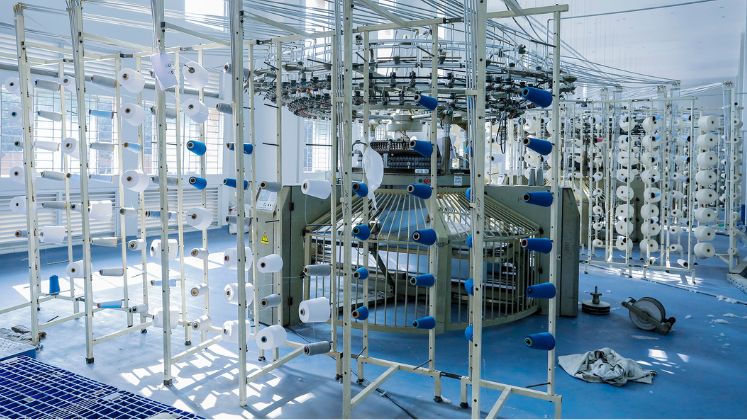
According to the Bangladesh Textile Mills Association (BTMA), Bangladesh has the capability to supply 85 per cent of the yarn and fabric required by the RMG sector through its backward linkages. Furthermore, it currently contributes 40 per cent of the woven fabric needed by the knitwear sector, resulting in a significant 75 per cent value addition. However, despite these capabilities, Bangladesh imported raw materials worth US $ 16 billion in FY ’23 to export RMG worth US $ 47 billion.
While it’s not always possible to entirely eliminate imports due to buyer requirements for specific raw materials, Bangladesh’s negotiation power in this regard remains limited. The Covid-19 pandemic has underscored the importance of focusing on internal strengths to avoid falling behind. Thus, there’s a growing consensus on shifting the focus from globalisation to localisation and leveraging domestic strengths to strengthen the RMG sector.
Backward linkage development in knitwear
Bangladesh knitwear sector’s core strength lies in its backward linkage. Entrepreneurs in this sector have not only expanded their stitching capacity over time but have also invested in associated industries to enhance the sector’s overall capacity. This gradual evolution is making the country’s knitwear sector inch closer to being self-sufficient in fabric and yarn production. As the export volume from the knitwear sector has grown, the capacity of the backward linkage has expanded accordingly.
In the 2022-23 fiscal year, knitwear contributed 54.77 per cent to overall RMG export earnings. The direct contribution of the knitwear sector to Bangladesh’s GDP is approximately 9 per cent, while the backward linkage sector adds another 2 per cent to it. The sector achieves a domestic value addition of about 75 per cent, significantly higher than woven products.
The Bangladesh Knitwear Manufacturers and Exporters Association (BKMEA) has initiated various efforts to promote the growth of knitwear exports by incorporating cutting-edge technologies, thus increasing domestic value addition.
As the export volume from the knitwear sector has grown, the capacity of the backward linkage has expanded accordingly. The growth of spinning mills has mirrored the rise in knitwear exports. In 2010-11, there were 383 yarn manufacturing mills and 743 fabric manufacturer mills, but currently, there are over 550 yarn manufacturing mills in Bangladesh as of 2023. The total investment in the backward linkage, including knitting, dyeing and spinning industries, has exceeded US $ 7 billion over the years.
This expansion is a result of the growth of the backward linkage industry, which has enabled the knitwear sector to achieve higher value addition and, consequently, a significantly higher net retention rate. Presently, local suppliers can meet up to 90 per cent of the sector’s fabric requirements and around 75 per cent of the yarn requirements.
Additionally, the sector has generated employment opportunities for numerous individuals through direct and indirect economic activities, which has positively impacted the country’s social development, women’s empowerment and poverty alleviation. (See Table 1)
Table 1 Future Projection of Bangladesh Knitwear Industry
| Fact | Vision – 2050 |
| Knitwear Export | US $ 32.62 billion |
| Growth of Knit (%) | 32.1 |
| Share in Apparel Export (%) | 69.4 |
| Share in National Export (%) | 53.2 |
| Share in GDP (%) | 12.12 |
| Employment Generation | 4.9 million |
| Female Empowerment (%) | 67 |
| Poverty Reduction (%) | 9.1 |
| Shipping and Logistics Industry | US $ 91 million |
| Forward and Backward Linkage Industry | BDT 254 million |
Econometric forecasting methods: Autoregressive moving average with exogenous inputs (ARMAX), Forecast skill (SS) and Regression analysis
It’s evident that technical efficiency in Bangladesh knitwear sector is on the rise. This sector warrants special attention due to its substantial contributions to foreign exchange earnings, employment and value addition through the backward linkage industry. The BKMEA has formulated a blueprint to export at least US $ 30 billion worth of knit products by 2030 which is not a far-fetched projection.
Currently, Bangladesh exports knit products to 153 countries, and by 2050, there are plans to expand the reach to 212 countries by delivering international standard knit products. Hence, there is a strong emphasis on exploring new markets for future growth.
Knitwear is dominating wovenwear segment – thanks to backward linkages
During the initial four months of the current fiscal year, in July-October, the earnings from RMG exports amounted to US $ 14.78 billion, marking 5.95 per cent year-on-year growth, according to data provided by the Export Promotion Bureau (EPB).
Out of this total, US $ 8.67 billion was attributed to knitwear exports, which displayed a remarkable 12.32 per cent year-on-year growth, while woven garment items contributed US $ 6.10 billion, reflecting a negative growth of 1.94 per cent.
For FY ’24, the total RMG export target has been set at US $ 52.27 billion, with US $ 28.43 billion earmarked for knitwear and US $ 23.84 billion for woven garments.
Historically, woven garments held the top position in the export sector. However, over time, knitwear has risen to prominence. One of the primary factors contributing to the higher export performance of knitwear over woven garments is the reduced lead time and readily available raw materials.
International clothing retailers and brands now require shorter lead times, typically ranging from 45 to 60 days, compared to the previous 90 to 120 days. This shift is primarily driven by intense competition among international players. Local garment exporters have seized the opportunity to utilise locally sourced raw materials, with spinners supplying nearly 90 per cent of the raw materials from domestic markets, while weavers can only provide 45 per cent. As a result, woven garment exporters often need to import fabrics, particularly from countries like China and India, which adds time and cost to production and shipment.
Factories setting goals to align with the projection
Bangladesh’s textile mills and RMG factories have recognised that maintaining competitiveness is achievable through backward linkages and this is precisely what they have been focusing on.
Northern Tosrifa Group (NTG), a prominent textile and apparel manufacturing conglomerate in the country, embarked on significant innovation in 2018 by adopting Continuous Pre-Processing (CPP) dyeing for knit fabrics, becoming one of the pioneering companies in Bangladesh to do so. Its sister company, Tosrifa Industries Ltd., initially introduced a knit dyeing capacity of 25 tonnes per day, with plans for further expansion. The NTG group is currently producing a staggering 18 million minutes per month, comprising 3 million T-shirts and 2 million jackets, fine knit dresses and tops.
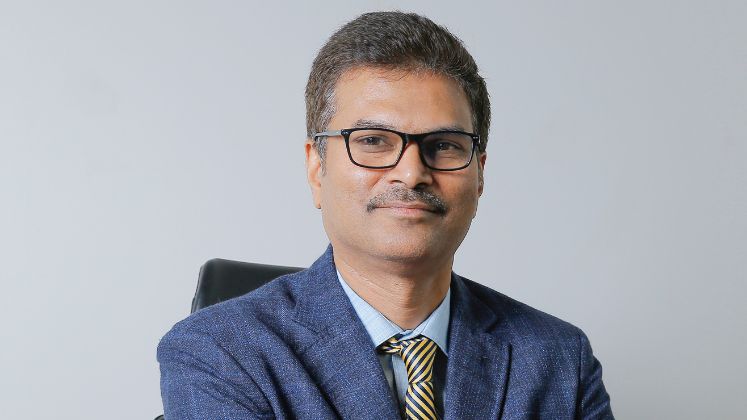
Mohim Hassan, Director of NTG, emphasised on the significance of CPP in knit fabric, acknowledging the challenges involved. He highlighted that their garment business already generates US $ 110 million in revenue and their efforts in backward linkages is not solely focused on increasing revenue but also on expediting their time-to-market.
Another key player in the industry, Pakiza Knits Composite Ltd. (PKCL), believes that technology is the linchpin in the knitting mill. The entire factory is outfitted with state-of-the-art machinery especially in the knitting division, including Mayer & Cie, Pilotelli, Pai Lung machines and other top brands, totalling 65 machines in all and it therefore boasts a monthly fabric manufacturing capacity of 550 tonnes.
PKCL is also addressing the challenge of maintaining humidity levels in the knitting area using technology. Proper humidity control is vital not only for operational efficiency and minimising yarn breakages but also for ensuring consistent yarn weight, which is essential for achieving the desired weight of knitted fabrics. Irregular humidity can cause fabric to become lighter, resulting in significant losses.

Rakibul Islam Khan, Managing Director of PKCL, explained his strategy of employing humidifiers or chillers to control humidity, aiming to maintain it at the optimal range of 50 per cent-60 per cent. “By doing so, we are mitigating the impact of irregular moisture in the air on yarn weight and fabric quality,” mentioned Rakibul.
At DIRD Composite Textiles Ltd. (DCTL), the knitting section exhibits an impressive daily production capacity exceeding 40,000 kgs. The knitting division is equipped with advanced machinery from renowned brands like Mayer & Cie and Matsuya. These cutting-edge knitting machines enable DCTL to produce a wide array of fabrics, including Single Jersey, Rib, Pique, Fleece, Terry, Mesh, Double Jersey, Interlock, Waffle/Thermal and more.
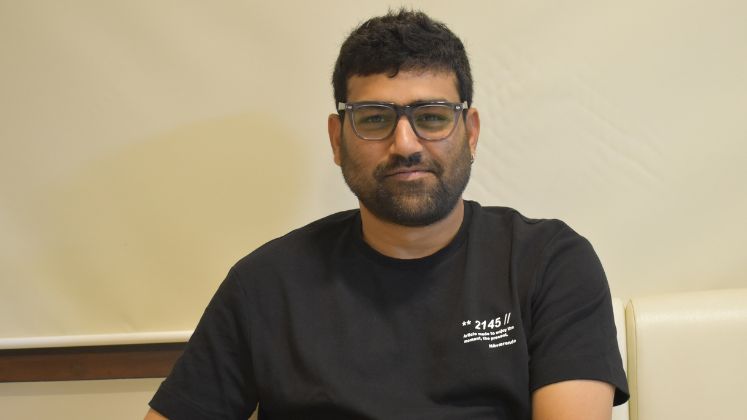
“Additionally, we excel in creating a variety of fancy fabric designs, including loose knit jersey, single and double jersey-based designs and different styles of fleece such as diagonal fleece, herringbone fleece, drop needle and semi-jacquard structures. Apart from circular knitting, DCTL’s knitting section also features flatbed knitting machines for collar, cuff and waistband production, as well as twill tape machines,” asserted Vishal Kumar, GM (Design and Development), DIRD Group.
| Factories in Bangladesh are rapidly opting for CPP (Continuous Pre-Processing) knit dyeing process which is a common method for dyeing knitted fabrics. While this process offers several advantages, such as efficiency and reduced water consumption, it also presents various challenges. Bangladesh is bravely facing these difficulties and taking steps to address them. Some of the key challenges faced during the adoption of this process and how the industry combats them are as follows:
1. Colour Consistency: Achieving consistent colours throughout a batch of fabric can be challenging in the CPP knit dyeing process. Variations in dye uptake and dye distribution can lead to colour inconsistencies. Bangladesh RMG industry addresses this challenge through improved dyeing machine technology and by adopting quality control measures to monitor and adjust dyeing parameters. 2. Environmental Concerns: The textile industry, including knit dyeing, is often criticised for its environmental impact. The use of large quantities of water and chemicals raises concerns about pollution and sustainability. To address this, the Bangladesh RMG industry is increasingly adopting eco-friendly dyeing methods, recycling water and adhering to environmental regulations and standards. 3. Energy Consumption: The CPP knit dyeing process requires substantial energy for heating and cooling. To reduce energy consumption, the industry is exploring energy-efficient dyeing equipment and processes and incorporating renewable energy sources wherever feasible. 4. Wastewater Treatment: Treating and disposing of wastewater generated during the dyeing process is a significant challenge. To address this, the Bangladesh RMG industry is investing in advanced wastewater treatment facilities and practices to minimise the environmental impact. 5. Chemical Management: The safe handling and disposal of chemicals used in the dyeing process are essential for worker safety and environmental protection. The industry is increasingly focusing on proper chemical management, including chemical recycling and waste minimisation. 6. Supply Chain Transparency: In an effort to improve transparency and traceability in the supply chain, the Bangladesh RMG industry is implementing technology and systems to track the use of materials, chemicals and water throughout the dyeing process. 7. Skilled Workforce: Skilled labour is essential for efficient and high-quality dyeing. The industry is investing in workforce training and development programs to ensure that workers have the necessary skills to operate modern dyeing machinery and troubleshoot issues. 8. Quality Control: Maintaining consistent product quality is a top priority. The industry is implementing robust quality control processes and testing methods to ensure that the dyed fabrics meet the required standards. 9. Cost Control: Managing the cost of dyeing processes is crucial for competitiveness. The Bangladesh RMG industry is working on cost-effective dyeing methods and supply chain optimisation to keep production costs in check. |