Bangladesh’s knitwear chief has warned that the country’s garment industry may be heading towards a crisis reminiscent of the decline once seen in the jute sector, amid concerns over recent labour regulation changes.
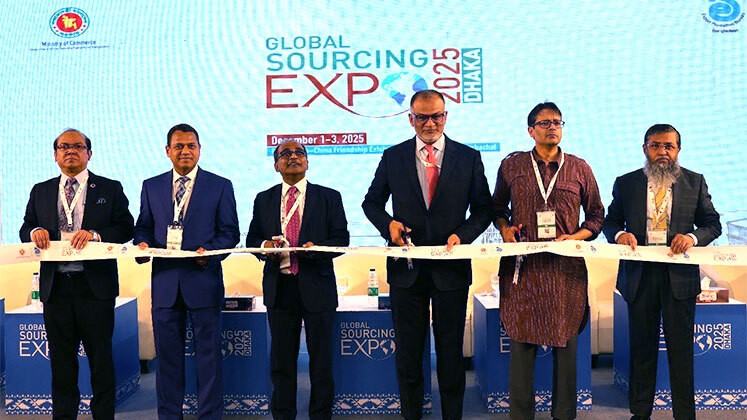
Speaking at a session titled “The Potential of Bangladesh’s RMG Sector: The Way Forward”, held during the Global Sourcing Expo 2025 at the Bangladesh–China Friendship Exhibition Centre in Purbachal on Monday, Bangladesh Knitwear Manufacturers and Exporters Association (BKMEA) President Mohammad Hatem said the industry risked repeating history if corrective measures were not taken.
Syeda Rizwana Hasan, Adviser to the Minister of Environment, Forest and Climate Change and the Minister of Water Resources said Bangladesh’s apparel sector had built a strong international image that must be safeguarded, adding that she believed the industry would be able to maintain its reputation.
IFIC Bank Managing Director Syed Mansur Mustafa said the bank was increasingly prioritising SME financing and called for a deeper examination of the reported 400 factory closures highlighted in the media.
Fazlee Shamim Ehsan, President of the Employers’ Federation, said banking rules must be designed to support responsible borrowers, while FBCCI Administrator Md Abdur Rahim Khan noted that Bangladesh’s limited export basket becomes evident in trade negotiations. He said he remained optimistic that the country would navigate global markets after its graduation from LDC status, though some export destinations may impose tariffs.
Bangladesh Employers’ Federation Director Akhter Hossain Apurbo argued that many competing developing nations benefit from government subsidies to strengthen export competitiveness, and suggested Bangladesh should consider similar measures.
Export Promotion Bureau Vice-Chairman Hasan Arif said the country must work diligently to overcome structural challenges if it is to secure a stronger export future. Meanwhile, Syed Sultan, Chairman of the Labour Reform Committee, maintained that the apparel industry has grown over four decades on a solid foundation that would not be weakened by recent labour law reforms.





 Bharat Tex Special Report 2026