Different stitch types are required to join different types of fabrics in different circumstances and for different end use. For example, single needle lockstitch is used for joining two plies of woven fabric resulting in limited or no stretchability along seam and on the other hand, single needle chainstitch is used for joining two plies of knitted fabric resulting in stretch along seam. Similarly, three-needle flatlock or bottom coverstitch is used for hemming of knitwear and five or six thread top and bottom coverstitch are used for butt or overlap joining of thick knitwear for avoiding bulk. These different stitch types were developed over half a century ago and virtually no new stitch types were developed during the last half a century. ‘ActiveSeam’ from Merrow Sewing Machine, USA heralded a new beginning of R&D and infused a new hope for the sewing machine manufacturers, a StitchWorld exclusive on this revolutionary seam.
Challenged to create a perfect flat seam that would replace flatlock, the team at Merrow worked from 2008 until 2012 to refine and develop the ActiveSeam class of stitches four years ago. The program was collaborated between Merrow’s engineering team, sewing team and machine building team.
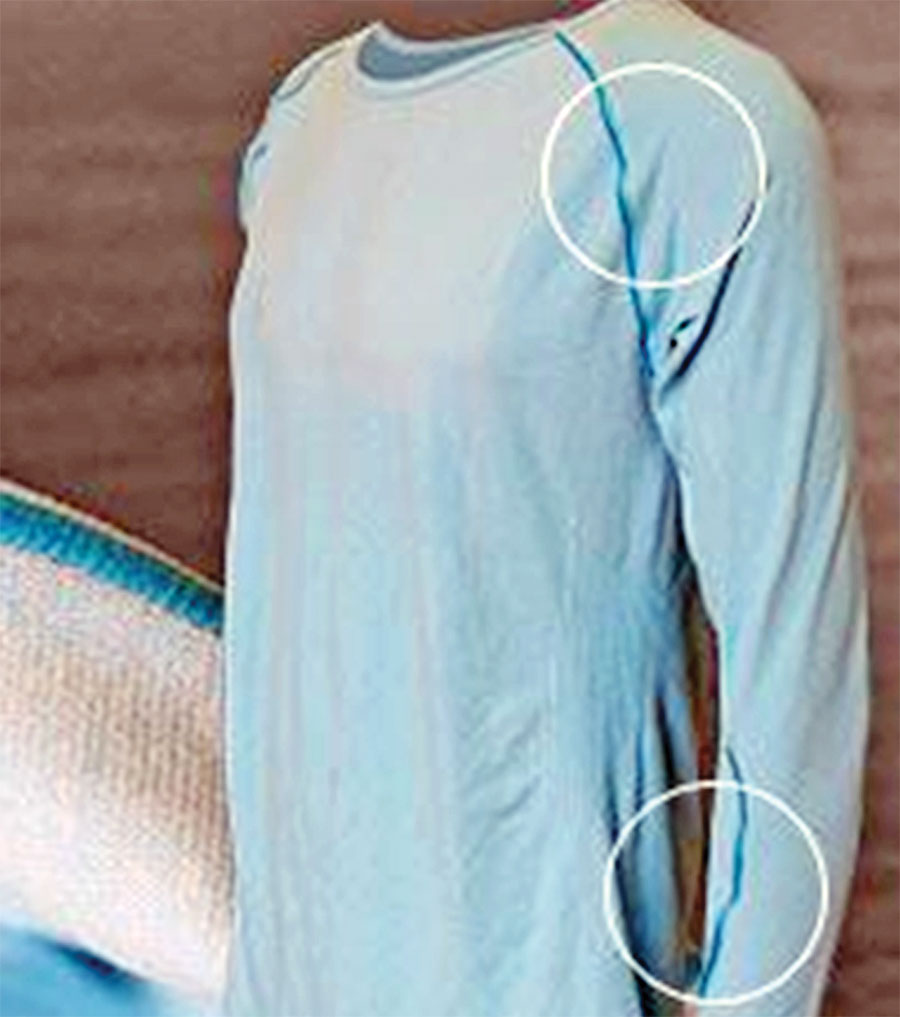
By definition, there are three versions of ActiveSeam: the Infused version of ActiveSeam, wherein the seam is sewn with three threads – one each in the inner needle, outer needle, and upper looper. To maximize the visual effect of an Infused stitch, two different colour needle threads are typically used. In ActiveSeam Comfort, two thread stitches are used in which only the outer needle and upper looper are threaded. The third version, ActiveSeam Slim, is also a two-thread stitch, but in this case the inner needle and upper looper are threaded. Within each version, multiple looks can be attained by varying thread colours, stitches per inch or a combination of the two.
Merrow Sewing Machine has applied for a design patent on the ActiveSeam stitch with the United States Patent office and hopes to be ready to announce “ActiveSeam” as an official stitch type in the near future. Because of the versatility of application and variability of aesthetic provided by the three versions of ActiveSeam, any cover, overlock, or flatlock application can be replaced with ActiveSeam. ActiveSeam offers a new look, quantifiable technical performance, and nearly 100% stretch which makes it a suitable alternative for 605 or 607 stitch types too. In an unprecedented move, Groz-Beckert® has designed a branded needle specifically for sewing in the Merrow MB-4DFO. Merrow has also worked closely with A&E® and developed threads which best meet ActiveSeam’s aesthetic and sewing standards.
Advantages of ActiveSeam
• Essentially undetectable when worn next to skin, softer and more durable than conventional stitching. The stitch moves with your body and feels better all over. Next to skin garments wear better and look nicer while being worn.
• The ActiveSeam is a lower profile seam that is soft on the inside and tough on the outside.
• Designed to satisfy strict comfort and aesthetic requirements, ActiveSeam minimizes the number of threads used in the stitch to maintain a flat profile. Material is butted within the stitch – not lapped or bunched – ensuring a low profile and comfortable next to skin experience.
• Far stronger than flatlock, the ActiveSeam class of stitches is tougher and will last longer than alternatives.
• With more than twice the stretch built into the seam, garments can be ‘designed in new ways’ and will ‘fit the human body better’ without restricting athletic movement.
• When compared to a 6-thread flatlock seam with identical thread, fabric, and SPI, the ActiveSeam 2 & 3-thread seams proved to be more than 30% stronger and had the ability to stretch (linear travel) 100% further.
HERITAGE
Overlock stitching was invented by the Merrow Machine Company in 1881. Over the time, the Merrow Machine Company pioneered the design of new machines to create a variety of overlock stitches, such as two, and four-thread sergers, the one-thread butted seam, and the cutterless emblem edger. Today two- and three-thread formations are also known as “merrowing”. Carrying the lineage forward, Merrow has once again disrupted the way the industry understands and looks at seams with its latest development – ActiveSeam.
Applications
To run the ActiveSeam stitch, Merrow has also launched the new MB-4DFO model of machine to sew all three unique ActiveSeam stitches and can be configured for two or three thread sewing. It was specifically developed to sew on base layer garments; the ActiveSeam family of stitches are flat, comfortable, and stretchable stitches that replace traditional flatlock seams. The MB-4DFO stitch width can be varied from 3/32″ to 5/32″ according to material properties and/or application requirements and is custom configured to sew specifically using customers’ unique material and thread. Tension settings, eccentrics, and cutter placement are all adjusted to ensure that the customers receive a unique version of the ActiveSeam that is specific to their garment and application. Growing sportswear brands like Musto (www.musto.com), Verge Sport (https://www.vergesport.com/products/product/389), and Bioracer Speedwear (https://www.bioracer.com/en/team-clothing/1490/race-proven-bibshort-as-stratos) are currently using ActiveSeam in selected ranges of products to offer unique performance to the wearer and to establish their brands as technical leaders. In 2011, Merrow introduced ActiveSeam Stitch Tag, allowing apparel manufacturers to monetize their investment in stitching machine. The branded stitch licensing agreement included the cost of the hang tags, a fixed upfront fee, and a percentage of sales above an agreed-upon benchmark.