Accessory manufacturers play a very important role in supporting the garment makers and the case is no different for Bangladesh.
According to data from the Bangladesh Garments Accessories and Packaging Manufacturers and Exporters Association (BGAPMEA), the number of accessory factories was below 50 in the late ’80s even if most of the essential items used to be imported from India, China, Hong Kong and other destinations.
Today, more than 1,900 factories are operating and supplying almost all the required accessories to the garment industry while also employing more than seven lakh workers in the sector with export value (of accessories) of around US $ 7 billion, of which US $ 6.25 billion comes in the form of deemed exports and US $ 0.75 billion in the form of direct exports.
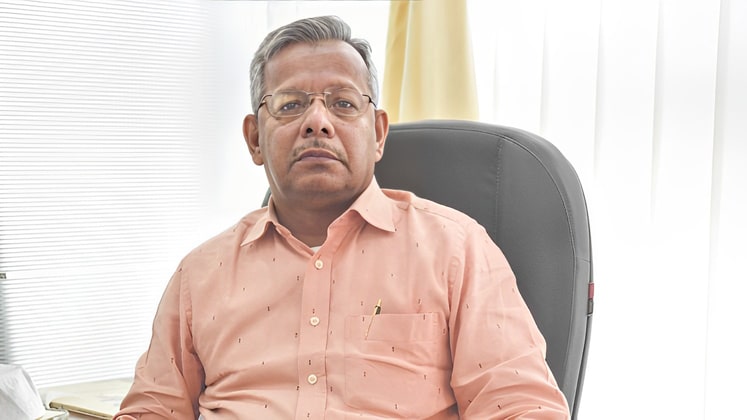
Apparel Resources (AR) recently caught up with BGAPMEA President Moazzem Hossain Moti at the trade body’s newly-built office in capital city Dhaka to know his thoughts and views on various prospects and challenges of the ever-growing accessory sector, as he sees it.
Here are the excerpts.
AR: Backward linkage is vital for the apparel industry and accessory makers have a very important role to play in it. How do you see the sector shaping up?
Moazzem Hossain Moti (MHM): From under 50 accessory units in 1989 to more than 1,900 factories today, the accessory sector has come a long, long way. Today, we are able to supply almost all the required accessories to the garment industry besides providing employment to a large number of people (seven lakh workers).
The export value of accessories is around US $ 7 billion, of which US $ 0.75 billion is from direct exports while US $ 6.25 billion comes in the form of deemed export. Before the outbreak of Covid-19 pandemic, the flow of investment to the sector had increased significantly, prompting many new entrepreneurs to come up with fresh investment plans even as existing units also expanded their capacities. For instance, the number of garment accessories-producing factories with Taka 500 crore in investment has been more than 35, which was non-existent even a few years ago.
There are several units today with more than Taka 1,200 crore in investment and they are performing very well in both the domestic and international markets.
What’s more, we have managed to drastically reduce the import dependency for accessories as only 10 to 15 per cent of the required accessories are now imported and that too primarily owing to the buyer’s nomination.
AR: This is a very encouraging scenario; is the investment continuing still?
MHM: The flow of investment started slowing down after the start of the pandemic in 2020. The impacts of the global health crisis, however, have slowly petered out lately. Now, the fallouts of the war (Russia-Ukraine) are hurting the sector as investment has gone down.
As we know that after the Covid pandemic and the Russia-Ukraine war, the devaluation of BDT is nearly 25-28 per cent against USD, as a result, entrepreneurs need to spend more money than in the pre-Covid period.
But, I believe this situation is temporary. As concerned ministries and departments have already taken several steps, the situation would be better within a very short period.
However, owing to the volatile global economic situation and the fall in demand from local garment exporters, many accessories units have been running at 75 per cent of their capacity.
But investment is of paramount importance if Bangladesh wants to achieve the target of earning US $ 100 billion from apparel shipment by 2030 and when the garment exports grow to US $ 100 billion, the amount of the accessories export will also cross US $ 15 billion.
AR: What is it with the trade license that you have been mentioning about?
MHM: Every year we have license to renew, with trade license being the first requirement.
At present, we need at least 32 licenses to run the business and we need to renew them every year which costs both money and time. What’s more, we have to get many licenses issued physically as not all have become digital in Bangladesh yet.
The existing import registration certificate (IRC) and export registration certificate (ERC) have been extended to five years instead of the previous one year and the same should be the case with other licenses too. I really don’t understand the logic behind the yearly renewal of licenses.
The entrepreneurs, based on their needs and financial capacity, should be given the option to opt for the duration that suits them the best.
What’s more, currently when one renews a license, it is not for a calendar year but for the financial year, so if one’s license gets expired in say April or May and he/she has to get it renewed, it would only be till 30th June, the end of the fiscal year and that too after paying charge for the whole fiscal year, which again belies logic according to me.
AR: When we interviewed the previous BGAPMEA President, he also spoke about similar issues. Why do you think they are lingering still?
MHM: Maybe we failed to make the policymakers understand the problems and even if they did notice, they didn’t pay due attention.
Then there are issues pertaining to the training and mindset of the Government officials as well. Most of the time, I have seen the concerned officials don’t understand the technicalities of things, which pose a bigger challenge for us to put across our points of concern. As of today, our sector is giving around US $ 7 billion of support to the garment industry and if our sector fails to deliver, we will have to get this US $ 7 billion worth of accessories from overseas. Even now 5-10 per cent of accessories are imported from China.
We have recently planned to sit with the BGMEA, keeping in view the upcoming LDC graduation and its fallouts. We would like to know from the BGMEA what their forecast is in terms of accessories so that we can ask our accessory entrepreneurs to scale things up accordingly to prevent the business from going overseas.
AR: What about the single window system; is that not of much help?
MHM: Under that only comes the export and import registration certificate.
We have recommended the Government should consider 364 days as the license renewal period rather than a financial year. I have given this recommendation even in last year’s budget presentation but to little avail.
I am further of the view, the trade bodies should be allowed to issue utility certificates on behalf of the Government, which will be a better option as it would help the Government in saving time and manpower and allow it to concentrate more on implementation of the rules.
AR: What else do you recommend for the sector’s evolution?
MHM: We should form a taskforce combining Government and business sector stakeholders to find out the problems that hamper the development of the backward linkage sector of the country. The demand for accessories and packaging products is increasing significantly and if the Government offers facilities for the industry, our export cost will drop by over 20 per cent along with helping in value addition.
We also seek from the Government policy support including those related to National Board of Revenue (NBR), customs and port facilities to increase the sector’s export earnings in line with the US $ 100 billion apparel export target by 2030.
AR: The Dominican Republic has reportedly sought support from BGAPMEA. Can you throw more light on that?
MHM: Yes, you heard it right. Very recently, the Ambassador of Dominican Republic, who has his office in New Delhi, came to meet us to create better links and facilitate investments there.
Dominican Republic has an evolving garments industry even as they export to the USA duty-free.
Initially, I thought the Ambassador may have come to meet me thinking I am from BGMEA as names of BGMEA and BGAPMEA are somewhat similar but he told me categorically it was the BGAPMEA President that he wanted to meet.
He further added even if they have an evolving apparel industry, there is very little in terms of backward linkage support and because of which they have to import almost all the raw materials including accessories from overseas, which besides being time-consuming, has been hampering production cycles as well.
He thus asked us to consider investing in Dominican Republic to set up accessories unit. We are planning to visit the country with a team in April this year. Let’s see how things proceed.