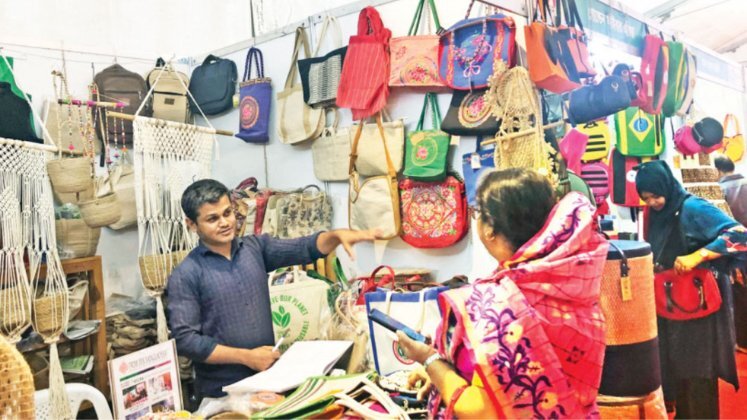
Experts say Bangladesh’s cottage, micro, small and medium enterprises (CMSMEs) hold substantial growth potential for the economy, but face hurdles such as limited access to finance, inadequate infrastructure, weak policy support, restricted market access, and slow technology adoption.
Speaking at a seminar organised by the Dhaka Chamber of Commerce and Industry (DCCI) on branding and marketing challenges for CMSMEs, DCCI President Taskeen Ahmed highlighted that CMSMEs account for around 90% of the country’s industrial sector and provide employment to roughly 12 million people. He warned that recent US tariffs on Bangladeshi exports, especially ready-made garments, could raise production and export costs and threaten competitiveness.
Ahmed urged entrepreneurs to embrace innovation and upgrade efficiency, moving away from outdated practices to accelerate development. He called for faster adoption of technology and emphasised the need for certification, compliance, and incentives to promote sustainable technology use. Improvements in product quality, branding, and export strategies were also proposed, alongside the creation of industry clusters and a CMSME database, greater foreign investment, and robust support for startups.
Industries Secretary Md Obaidur Rahman noted that the lack of strong national brands has limited Bangladesh’s export potential and said the government would revise SME and industry policies to address emerging sectors. He stressed the importance of branding, product quality, and intellectual property rights protection, and indicated ongoing efforts to boost exports of geographies and other protected products (GI products).
Md Saiful Islam, chairman of the Bangladesh Small and Cottage Industries Corporation (BSCIC), said the agency is aiding entrepreneurs through industrial parks, affordable financing, and training, with plans to exempt holding taxes for park-based businesses. He also urged Bangladeshi producers to expand on global e-commerce platforms, improve packaging and labeling, and pursue more international certifications to boost exports.
Mohammad Hasan Arif, vice-chairman of the Export Promotion Bureau (EPB), highlighted the role of consumer preferences in branding and called for stronger public-private collaboration. He announced that the EPB will establish an Export Ecosystem Platform and a CMSME Help Desk to serve as points of contact among government agencies, along with training programs to upskill workers and support participation in international fairs, including an event in Brazil next year.
Bangladesh Bank’s SME and Special Programmes Department Director (acting) Muhammad Mustafizur Rahman noted the importance of product logos, consumer-focused design, and targeted promotions. He mentioned collateral-free loans up to Tk 5 lakh available to entrepreneurs and pointed out that a portion of SME lending has already been disbursed without collateral as of last December.
Industry stakeholders also emphasised region-specific product design and standardised, attractive packaging. Md Shafat Kadir, founder and CEO of Hat Bakso, acknowledged that tariff changes affect costs but argued that strong branding and marketing can unlock new export opportunities. The group urged heightened emphasis on branding models and marketing to strengthen Bangladesh’s global competitiveness. The EPB is also planning to help Bangladeshi firms gain visibility through international fairs and enhanced e-commerce presence.