Found on buildings, sidewalks, street signs and even trash cans from Tokyo to Paris to New York city, becoming a more acceptable part of a global visual culture is the recent outbreak of ‘street art’ as the new urban movement of this generation. Used as an aesthetic for reclaiming the streets, even though the concept has developed out of graffiti art, ‘street art’ shouts to bring art to the masses, as a form of self-expression and communication. More like a revolution, today the art form has developed in many kinds of ways in places all-over the world with not only art museums and galleries collecting and showcasing the work of street artists but also a fleet of fashion designers using them as prints in their garments. From literal streets to fashion – the combination of the two has become a cult concept amongst the youth at the moment, with ‘street art fashion’ becoming the next raging demand both in the international and the Indian domestic market, as the runways become yet another platform…
Originating in the 1960s, by two painters Keith Haring and Jean Michel Basquiat who started creating their paintings on the streets of New York City, it was the first time street art became a part of the popular culture. While often confused with graffiti, which represented social and political rebellion, street art movement signifies ‘expressing the street culture of young people living in big cities’. Done in a lot of ways, starting from painting on the surfaces of public or private property with a can of spray paint or roll-on paint, painting with the use of a homemade stencil, using homemade stickers, creating murals, posters, and even through digital video projections using technology and street installations – the very fact that street art is now made legal over the last decade by many Governments around the world, is also the probable reason for such a sudden trend of this look in the minds, hearts and even the clothes of people.
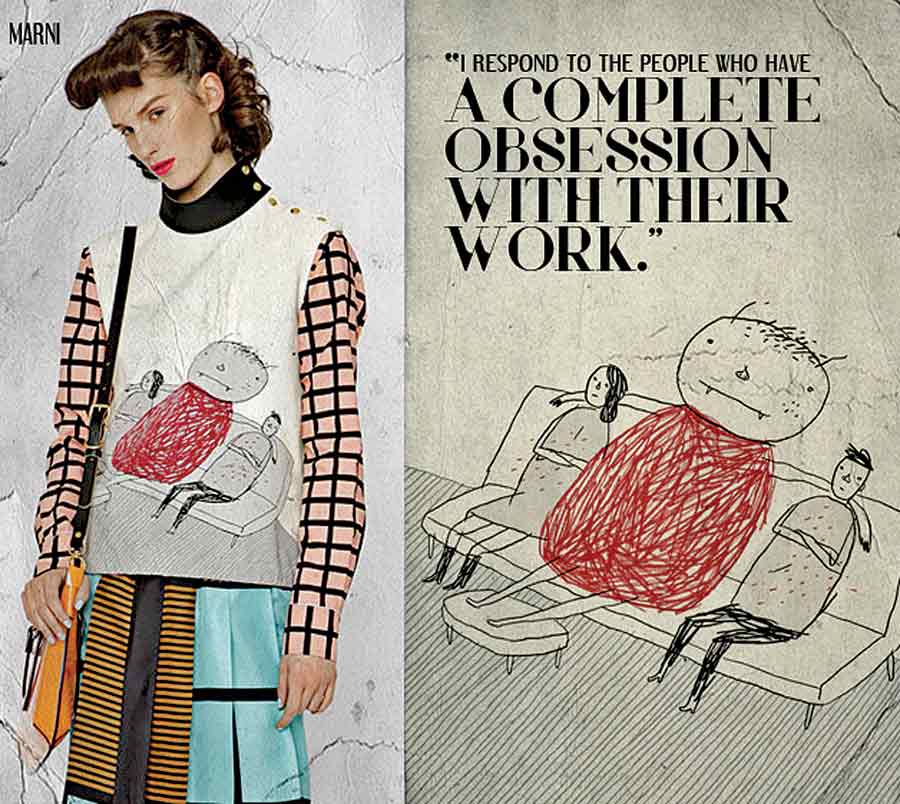
Well spread in Europe, US and Asia-Pacific, ‘street art’ has been a big influence in the fashion world over the last few years. Spotted in the collections of many brands and designers, off late, are also exclusive prints which are either created by in-house artists or are capsule collections made in collaboration with street artists. In November 2009, Vogue Paris had collaboration with KAWS, a New York-based artist and designer of limited edition toys and clothing, creating a merger between fashion and graffiti, and simultaneously a fabulous editorial spread for the magazine. Catching on popularity, many analysts have also tracked back the famous Prada 2011 collection that sported a much talked about banana print all-over to be inspired by the humongous Blu Mural in Managua, Nicaragua from 2005.
In 2012, a mysterious acid-green faced woman with pink flowers in her hair on a black brick wall appeared in the Ready-To-Wear line of Manish Arora, which was actually a collaboration of Street Artist Judith Supine with the designer to let the design team use his famous art work on a range of blouses, bolero jackets, pencil skirts, and 50s inspired ensembles. Applauded for a unique translation of street art into garment, Supine’s Manager Naheed Simjee stated, “Using detailed embroidering and taking elements like cigarettes in lips (which were hand embroidered on some of the pieces), exactly matching the colour palette and the use of bright fuchsia flowers to decorate dresses and tops – all signature imagery in Judith Supine paintings, made the artwork really come alive on the models.”
Another collection that brought street art and fashion together was the collaboration of Lacoste L!VE with Missouri-bred illustrator to bring his whimsical, storybook style to the brand. ‘Full of flowing movements, bright colour, strange critters and occasional violence’, the collection had an ultra creative combination of bright colours and childhood elements like dinosaurs, flying saucers, jungles and unicorns as motifs, made by the American artist who considers with pencil and paper as his creations to life.
Following the same concept and banking on the trend yet again was also Stuart Semple who collaborated with the eccentric British clothing brand Aubin & Wills to design the ultimate Christmas cardigan inspired by his late grandfather who encouraged his creativity as a child. Only created in a very limited edition of 100 in pure Merino wool, each piece in the stock was numbered and hand signed with a packet of runner bean seeds to plant at home. Encapsulating Stuart’s childhood memories of gardening tools and flowerpots, the cardigan features a Fair Isle pattern with a shawl collar and chunky buttons. Describing his story through art and taking it to the world with fashion, the artist is recognized for his contemporary body of work ranging from paintings, printed and installations and collaborations with pervious fashion labels like Levis, Evisu, 7 for all Mankind and Diesel.
While the trend is becoming more and more commercial globally bringing lot of business to retailers and recognition to artists and their work of street art, the popularity of the trend has also seeped down to India, with many local artists building their careers on the same concepts. Scanning and printing their drawings, illustrations, cartoons and crazy works of art on fabric and translating them onto T-shirts, dresses, boxer, shorts and even accessories for fashion and home, the fashion team at Apparel Online also spoke to some budding ‘street art meets fashion’ fashion entrepreneurs based in Delhi to figure out that the movement is all about with Indian designers and artists…