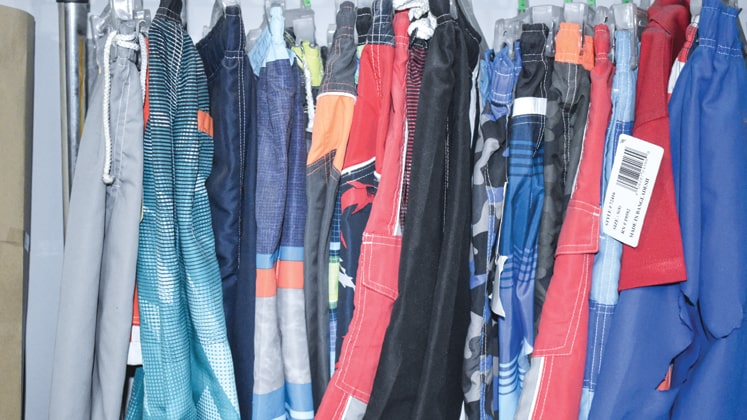
There are around 400 buying houses that are members of the Bangladesh Garment Buying House Association (BGBA). Apart from these, there are around 1,500 more buying entities operating in Bangladesh. These are some estimates that many in the industry beg to differ, with some putting the figures of buying houses to more than 2,000. Given the current scenario, the rivalry within is anybody’s guess.
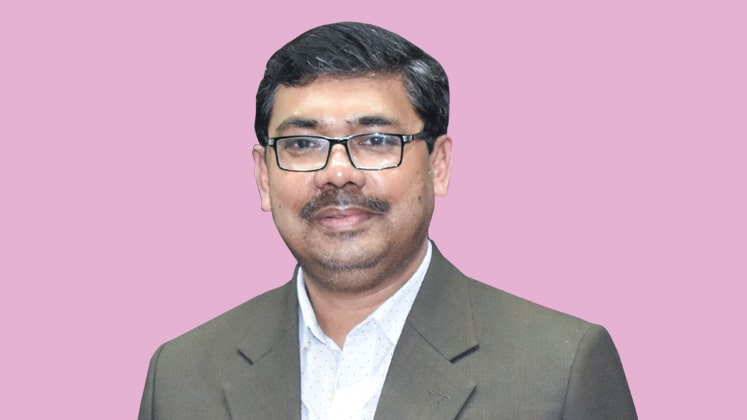
“Competition is very tough. Even brands and retailers are keen on working directly with the factories so that they can cut on unwanted expenses. Similarly, manufacturers also have their marketing and merchandising teams, and they are reaching out to the buyers directly. So business for independent buying houses is shrinking day by day,” claims Uzzal Barua, Deputy General Manager (DGM) of Chittagong-based Korean buying entity K&K Corporation Limited, speaking to Team Apparel Resources.
Thanks to its Korean origin – Daewoo of South Korea was an early entrant in Bangladesh, when it established a joint venture with Desh Garments Ltd. making it the first export-oriented readymade garment manufacturer in Bangladesh with many other Korean companies following suit to give a definite direction to the Bangladesh RMG sector – and with its longstanding buyer base from Europe, USA and Canada which it has been catering to since its inception in 1987, K&K is able to distinguish itself from others in this rat race to keep the business going.
K&K Corporation’s comprehensive management experience in all aspects of buying such as sourcing, merchandising, quality assurance, market intelligence, legislative compliance and logistic support services, besides its strong contacts within the garments industry with an exhaustive list of vendors, are some of the other reasons that helped it to beat the heat when the going is getting tough for numerous new players. Also that it has three offices in diverse geographical locations, helping it to efficiently service the buyers, ensure comprehensive sourcing and maintain seamless and undisrupted supply of raw materials.
“Our head office is in New York, which predominantly looks after the marketing along with servicing the markets of USA, Canada and Australia. We have our branch offices in Seoul and here in Bangladesh. Sourcing is done entirely from Bangladesh office while Seoul branch looks after Japan and Korea,” explains Uzzal.
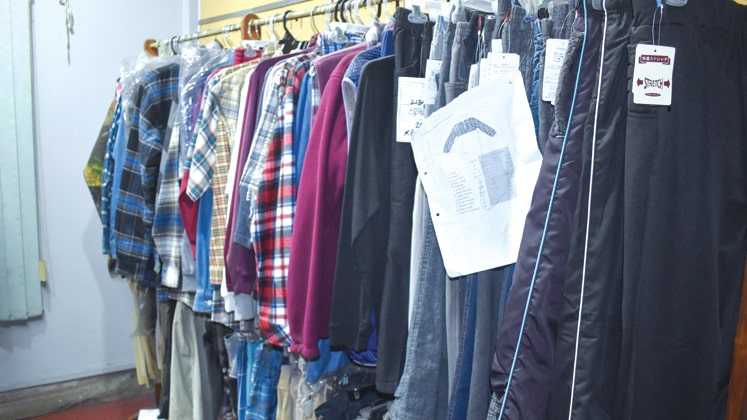
Sourcing an array of knit and woven items (menswear: shirts, T-shirts, jackets, shorts, trousers, suits; kidswear: rompers, jumpers, playsuits, dresses, shorts, trousers, dungarees, tops, T-shirts, sweatshirts, jackets, shirts; ladieswear: dresses, tops, blouse, T-shirts, skirts, shorts, trousers, jackets, anorak, parkas, etc.), K&K, which has lately curtailed its vendor base to 12 garment manufacturing companies (some of which have more than one unit) from earlier 20 as a strategically driven move to concentrate on big and medium-sized manufacturers, focuses on impeccable quality control and correct selection of factories to churn out the orders successfully.
“Right order to the right factory’ is our primary focus area,” says Uzzal, who works in tandem with nine other merchandisers and eight QAs to make sure that buyers’ expectations are met, and satisfactorily too. Given that K&K is working with these factories for long, helps the company to push in smaller runs along with bigger orders, thanks to the rapport it has built with the vendors over the years.
“We prepare a time and action planner per season/production and both customers and suppliers’ dates are fed in. This ensures that we know all time lines beforehand and complete transparency is maintained in production. We maintain 98 per cent consistency in meeting delivery dates,” explains the Deputy General Manager of K&K Corporation.
To maintain the quality parameters, the eight QAs work in close coordination with the supplier factories in all stages of production to iron out glitches if any. “Our QAs visit the factory on a daily basis throughout the production process. The QAs are also rotated from factory to factory to ensure that if one misses out on anything, it is pretty much, detected and corrected by the next QA. From inventory to final output, we oversee the entire cycle and report the same to our buyers. Special emphasis is paid during cutting and sewing,” Uzzal maintains.
K&K Corporation follows AQL 4 and on demand can give AQL 2.5 or AQL 1, the price of which depends on the levels selected. It is also open to customising services to any standard as per the clients’ requirements.
Now with increasing number of buyers concentrating on cost cutting and shifting the responsibilities of R&D to buying houses and supplier factories, K&K Corporation is chipping in its bit to ensure that the clients are not inconvenienced in the PD front. “Buyers generally provide us a brief on kind of products they are interested in based on which we shortlist products within a category and send across our developments. These days, no one wants to have R&D as it is very expensive.
At times, buyers provide us with some samples as inspiration, based on which we develop some styles for them to choose from and suggest changes if any. Once everything is decided upon (style, colour, quantities, price), we take the orders and place those accordingly with factories depending on their expertise and efficiency.
To make things easier for its clients, K&K also takes upon itself the responsibility to source the raw materials (fabrics and accessories), for most of which it either depends on the local players or overseas suppliers.
“In 70 per cent cases, we do the sourcing, rest 30 per cent comes in through buyers’ nominated suppliers. However, local-availability of fabrics becomes an issue at times. Most knit fabrics are available locally but not woven. Same is the case with special accessories, for which like fabrics, we have to depend on places like China, Taiwan and Hong Kong,” says Uzzal, to end the hour-long conversation on a positive note, adding, “Our company maintains a constantly high standard of business conduct, ethics and social responsibility. We take pride in the efficiency of what we do. The most important asset is our experienced personnel who build our company and explore our reputation among buyers and customers. We are committed to the growth and improvements of all aspects of our operation and will continue to be the leader in our industry.”