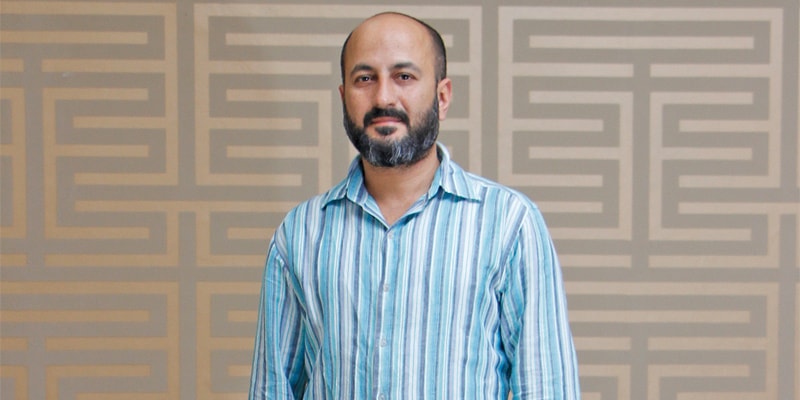
Across India, many apparel exporters have reasonable share in the domestic market or are creating their reach in the domestic arena. In fact, since the last few years, it has been a growing trend. On the other hand, there are few companies who were earlier into the domestic market and were working with good brands, but now they are focusing on overseas market. Ludhiana based Khanna Knitwears and Exports is a perfect example in this regard. More than 4 decades old, this company, having exposure of working with most of the top Indian as well as international brands selling in India, is now totally into export. Apparel Online talked about the reasons, difficulties and achievements of this turnaround with Sumit Khanna, Second Generation Director of the company which is 100 per cent EOU as of now.
Taking the legacy of his father further, Sumit joined business in 1995 and contributed to the development of his company by starting work with big brands and retail chains such
as Wrangler, Benetton, Max, Lifestyle, Shoppers Stop, Pantaloons, Big Bazaar and many more. Apart from this, some amount of export also began but the core market share of the company was in these brands. Currently doing an annual business of Rs. 19.5 crore, the company has a production capacity of more than 70,000 and 40,000 pieces of T-shirts and sweaters per month, respectively. It started its export business with Dubai, Muscat and Kuwait, but later went on to add UK, US and Europe. Gulf countries do have 50 per cent share in the company’s export. In the last three years, the company has completely converted itself into exports only. What were the reasons that pushed Sumit to focus only on exports? He informed, “We stopped working in domestic market due to various reasons like change in weather, less demand of winterwear, sourcing of products by brands at cheaper rates from other countries and lack of commitment from domestic buyers. All these things were creating difficulties for us at every step of our business which made us change our focus to export where we had a very nominal share at that time.”
• It is not that we have absolutely closed the gates or will not work for Indian brands/domestic markets, but we need strong commitment and good price.
• In the exports domain, we work with 15 to 18 buyers and have better understanding with them.
• Even countries like Nepal are supplying to top Indian brands and Nepalese workers have better mindset that helps in maintaining quality production.
• Domestic or export markets are always buyer-driven but there is a difference at the planning level in both the markets.
For Sumit, this shifting was not a cakewalk, as assumed to be, especially during 2009 when global recession was forcing international buyers/retailers to consolidate. “We had some experience of export, despite that things were difficult, especially to find buyers who can feed us according to our product specialization. We approached buying agents/agencies and supported them with our best support. We were continuously participating in sourcing fairs too,” he added. The challenges were at the internal level be it in case of timely delivery, strong quality parameters, and to overcome these, the company used 70-80 per cent of its own capacity and this really worked for them. The organization also changed its ‘chalta hai’ mindset to achieve a standard quality level. Coating was another issue which it tackled with lesser margin. “I strongly feel that this is the better way to work rather than depending on job work and struggle to complete big orders compared to one’s own capacity,” says Sumit. In spite of facing losses initially, he continued in a strong, consistent way and once he got the buyers’ ways, there was nothing which could not be sorted out anymore.
Now looking back, Sumit feels that this move was completely in the right decision and the company is also moving in the right direction. “From my experience, I have found that working with international clients is much easier than working with domestic clients. There are no payment issues and they are strict to their commitments. Even payment cycles are better in export. Better order sizes and less style experimentation are also something that we enjoyed in export. Now I have lesser involvement in my factory just because of working for export markets. I and my entire staff learnt a lot while working for export but in domestic market, we had earnings only rather than learning. Most of the domestic brands are still not working on things like colour forecast,” he concluded.